

Introduction
Esports tournaments 2026 are bigger, richer and more global than any season before. Competitive gaming now fills arenas, draws millions of live viewers and pays record prize money to players, teams and organizations. Whether you follow a battle royale, a tactical shooter, a MOBA or a fighting game, this year offers a major event for you.
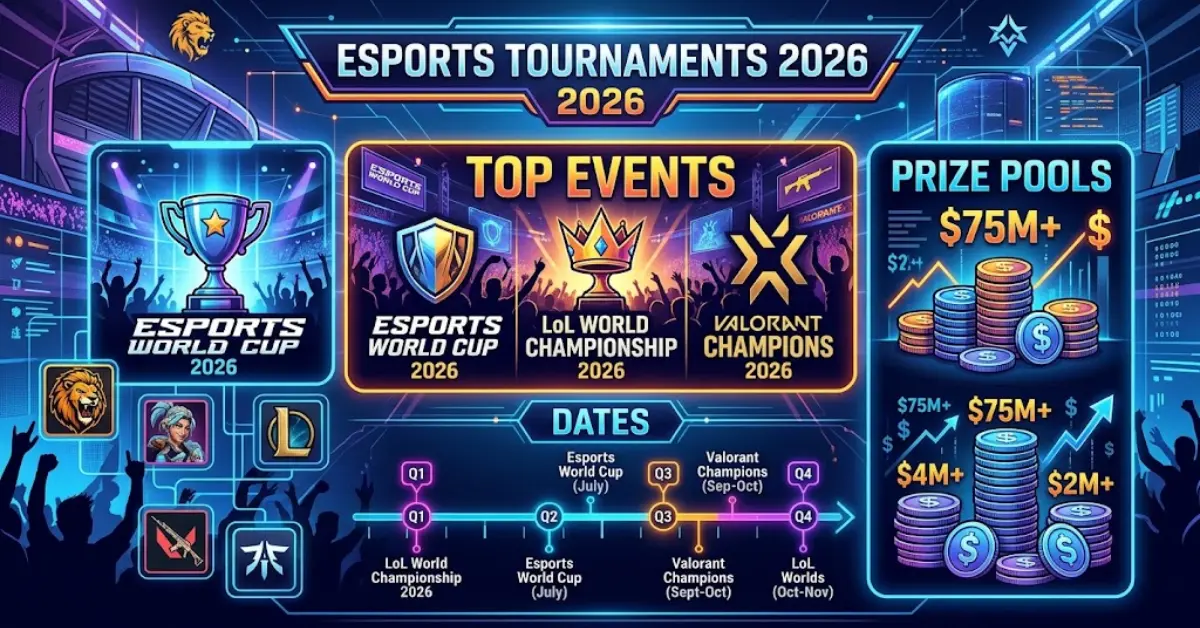
The 2026 calendar is packed. Riyadh hosted a seven-week Esports World Cup with a $75 million prize pool. The League of Legends World Championship is under way right now. A Counter-Strike 2 Major is still to come in late November. Between these headline events sit dozens of regional leagues, qualifiers and open tournaments.
This guide explains what esports tournaments are, which events matter most in 2026, how prize pools and formats work, where to watch, and how players can qualify. Dates are accurate as of late October 2026, but organizers sometimes adjust schedules, so always confirm details through official announcements before you plan.
What Are Esports Tournaments?
An esports tournament is an organized competition where players or teams face off in a video game under fixed rules, usually for prize money, ranking points or a title. They range from small online cups with a few dozen entrants to world championships watched by millions.
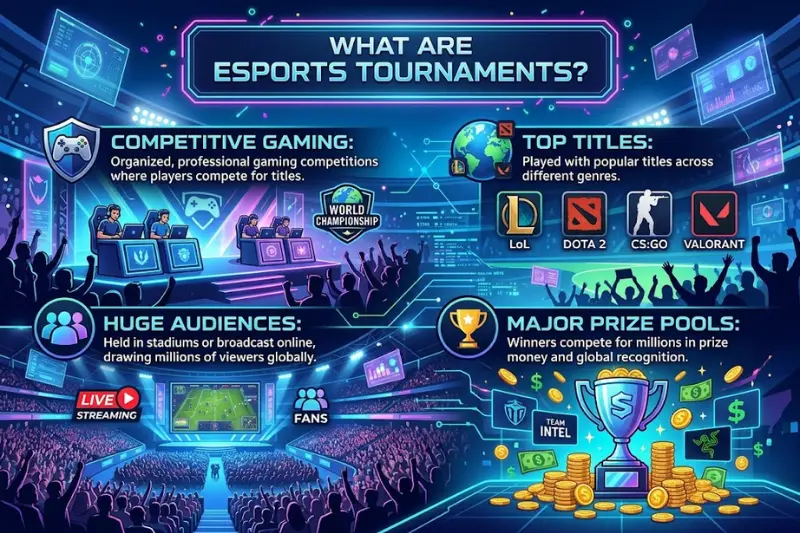
Most esports tournaments in 2026 fall into four categories:
- Open tournaments: anyone can register, often online, and winners move on to bigger events.
- Regional leagues: season-long competitions, such as spring and summer splits, where teams earn points and playoff spots.
- International events: a limited field of top teams qualified through leagues, rankings or regional qualifiers.
- World championships: the season-ending showpieces that crown the best team or player in a game.
Game publishers run some events themselves, while independent organizers and multi-game festivals run others. Both models matter. Together they form the competitive ecosystem that keeps professional players busy almost all year.
Biggest Esports Tournaments of 2026
The events below shape the competitive year. Dates come from published 2026 calendars and may shift slightly.
| Tournament | Game | 2026 dates | Location |
|---|---|---|---|
| VCT Masters Santiago | VALORANT | Feb 28 – Mar 15 | Santiago, Chile |
| IEM Cologne Major | Counter-Strike 2 | Jun 2 – 21 | Cologne, Germany |
| VCT Masters London | VALORANT | Jun 6 – 21 | London, UK |
| Mid-Season Invitational | League of Legends | Jun 26 – Jul 12 | Daejeon, South Korea |
| Esports World Cup | 24 games | Jul 6 – Aug 23 | Riyadh, Saudi Arabia |
| VALORANT Champions | VALORANT | Sep 24 – Oct 18 | Global |
| World Championship | League of Legends | Oct 16 – Nov 14 | United States |
| Esports Nations Cup | Multi-title | Nov 1 – 30 | Riyadh, Saudi Arabia |
| PGL Major Singapore | Counter-Strike 2 | Nov 25 – Dec 13 | Singapore |
Esports World Cup 2026
The Esports World Cup is the largest multi-game festival in competitive gaming. The 2026 edition ran from July 6 to August 23 in Riyadh and featured 24 titles across 25 tournaments. Its total prize pool reached $75 million, making it the richest event series of the year.
League of Legends World Championship
Running from October 16 to November 14, Worlds is the season finale for League of Legends and one of the most-watched events in esports. Its knockout stage and grand final decide the world champion, and the tournament follows the Mid-Season Invitational held earlier in South Korea.
VALORANT Champions
The VALORANT season built through two Masters events in Santiago and London, then ended with Champions, which closed on October 18.
Counter-Strike 2 Majors
Counter-Strike 2 fans had the Cologne Major in June, and the PGL Major in Singapore begins on November 25. Majors carry the highest prestige in the Counter-Strike calendar.
Popular Games in Esports Tournaments 2026
The Esports World Cup lineup shows how wide the scene has become. Several genres dominate the competitive calendar.
- MOBAs: League of Legends, Dota 2, Honor of Kings and Mobile Legends: Bang Bang lead this genre, with huge audiences in Asia and strong followings worldwide.
- Tactical shooters: Counter-Strike 2, VALORANT and Rainbow Six Siege X reward teamwork, map control and precise aim.
- Battle royale: Fortnite, Apex Legends, PUBG, PUBG Mobile, Free Fire and Call of Duty: Warzone deliver fast, unpredictable matches.
- Fighting games: Street Fighter 6, TEKKEN 8 and Fatal Fury: City of the Wolves bring one-on-one drama and loyal communities.
- Sports and racing: EA Sports FC 26, Rocket League and Trackmania attract fans who enjoy familiar competition formats.
- Strategy and mind games: Chess and Teamfight Tactics prove that esports is not only about reflexes.
Mobile esports deserves special attention. Titles such as Mobile Legends: Bang Bang, PUBG Mobile and Free Fire have large player bases in Southeast Asia, South Asia, the Middle East and Latin America. Their tournaments often pull in some of the biggest live audiences of the year, which is why organizers keep adding mobile titles to the schedule.
Prize Pools and Money in Esports 2026
The headline number for esports tournaments 2026 is the $75 million Esports World Cup pool. It splits into two main parts:
- Club Championship: $30 million shared among the top 24 clubs, up $3 million from the previous year. The winning club earns $7 million.
- Game Championships: combined allocations above $39 million, with each title carrying its own pool.
Other events use smaller but still significant pools. Published calendars list around $1.25 million for Counter-Strike Majors, about $1 million for VALORANT Masters events, and $2 million each for the League of Legends and Counter-Strike 2 tournaments at the Esports World Cup. PUBG Mobile’s World Cup event was listed at $3 million.
Remember that a prize pool is not the same as player income. Money is usually divided between the organization and its players, and rules differ by team, region and contract. Prize money is also only one part of earnings, because salaries, sponsorships and streaming often make up a large share of a professional’s income.
Esports Tournament Formats Explained
Understanding the format makes any tournament easier to follow. These are the structures you will see most often.
- Single elimination: lose once and you are out. It is fast and dramatic, but one bad match ends a run.
- Double elimination: teams get a second chance through a lower bracket, which rewards consistency.
- Round robin: every team plays every other team in its group. Results are decided by points or win-loss records.
- Swiss system: teams with similar records face each other each round until they qualify or are eliminated. Counter-Strike Majors use this style in their opening stage.
- Group stage plus playoffs: a common hybrid where groups narrow the field before a knockout bracket.
- League split: teams play a long regular season, and the best earn playoff spots and international slots.
Matches are usually played as best-of-one, best-of-three or best-of-five series. Finals tend to use the longest format, because it reduces luck and shows which team is truly stronger.
How to Watch Esports Tournaments in 2026
Watching esports tournaments 2026 is easy and mostly free. Most organizers broadcast live on major video and streaming platforms, and publishers often add broadcasts in several languages.
- Official broadcasts: the safest option, with professional casters, replays and match analysis.
- Co-streams: popular creators and former players comment on the same match, often with a more casual and funny style.
- Mobile apps and TV: some tournaments also reach regional TV channels and publisher apps.
- Replays and highlights: missed a match? Full replays and short highlight videos are usually posted within hours.
- Live attendance: big finals sell tickets, and the atmosphere in the arena is unlike any stream.
Check start times in your own time zone, because many events run in Asia, Europe or North America and the schedule can start very early or very late for you. Setting reminders for your favorite teams saves you from missing key matches.
How Players and Teams Qualify
Dreaming of playing in esports tournaments 2026 or 2027? The path is demanding but clear.
- Master one game. Specialists beat generalists. Pick a title and learn its mechanics, maps, characters and meta.
- Climb the ranked ladder. High ranks get you noticed and often unlock invitations to qualifiers.
- Enter open qualifiers. Most major events begin with online open brackets where anyone can compete.
- Join a team. Look for a team with good communication, defined roles and regular practice.
- Play in tier-two circuits. Smaller leagues and challenger events give experience and ranking points.
- Earn a league or invitation slot. Strong results in regional leagues unlock international events and world championships.
Teams should also build a reputation off the server. Consistent practice schedules, clean communication, a strong social presence and professional behavior help attract sponsors and organizations, which is how many teams survive long enough to reach the top.
Trends Shaping Esports Tournaments in 2026
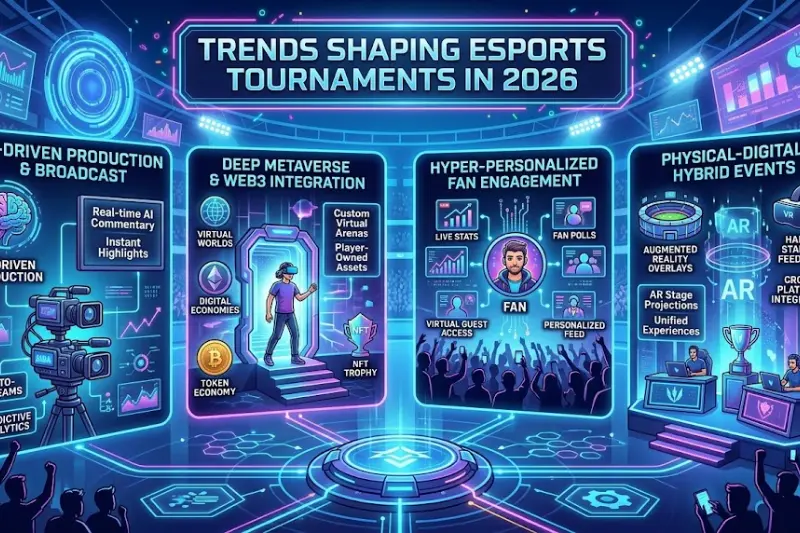
Several clear trends define this year’s competitive scene.
- Club-based competition: the Esports World Cup rewards organizations across many games with a dedicated $30 million Club Championship. That pushes teams to compete in multiple titles instead of one.
- Multi-game festivals: fans can watch several games in one place over seven weeks, which brings new audiences to titles they would not normally follow.
- Mobile growth: mobile titles continue to attract large live audiences and now sit beside PC and console games on the biggest stages.
- Co-streaming culture: creators have become a core part of the viewing experience, expanding reach far beyond the official broadcast.
- Data and analysis: teams rely on match data, replay review and performance tracking to prepare, and broadcasts increasingly show this information to fans.
- Global expansion: events are hosted across Asia, Europe, the Middle East and the Americas, giving more regions a stage.
- Player wellbeing: organizations pay more attention to sleep, mental health and sustainable careers, as playing at the top level is physically and mentally demanding.
These shifts suggest that esports tournaments will keep growing in size and variety in 2027 and beyond.
Frequently Asked Questions
What is the biggest esports tournament in 2026?
The Esports World Cup is the biggest by prize money, with a $75 million pool across 24 games. The League of Legends World Championship is often the most-watched single-game event.
When is the League of Legends World Championship 2026?
It runs from October 16 to November 14, 2026, in the United States, according to published calendars.
Which esports tournaments are still left in 2026?
As of late October, the League of Legends World Championship continues, the Esports Nations Cup is scheduled for November in Riyadh, and the Counter-Strike 2 PGL Major in Singapore starts on November 25.
How much is the Esports World Cup 2026 prize pool?
The total prize pool is $75 million. That includes a $30 million Club Championship and more than $39 million across individual game championships.
Can anyone join an esports tournament?
Yes. Many tournaments begin with open online qualifiers. Reaching the main stage usually requires strong ranked results, a good team and steady performance in regional events.
Are esports tournaments free to watch?
Most are. Official broadcasts and co-streams are usually free, though some live arena events sell tickets.
Conclusion
Esports tournaments 2026 show how far competitive gaming has come. A $75 million Esports World Cup, a global League of Legends championship, major shooter events and a growing mobile scene give fans more to watch than ever. The remaining weeks of the year still hold the Worlds finals, the Esports Nations Cup and a Counter-Strike Major.
If you are a fan, pick a game, learn its format and follow the schedule. If you are an aspiring pro, start with ranked play, enter open qualifiers and build a team. Either way, 2026 is a great year to join the esports community. Bookmark official schedules and check back often, because this fast-moving industry keeps adding new events.
