


Introduction
The 1990s were a golden era for television, especially when it came to game shows. Bright, colorful, and full of excitement, these shows were more than just entertainment—they became a part of everyday life for kids, teens, and families alike. From messy challenges and thrilling obstacle courses to mind-bending trivia and high-stakes quizzes, 90s game shows offered something for everyone. Popular 90s Game Shows
Whether you grew up racing through a funhouse, spinning the prize wheel, or trying to become a millionaire, these shows left a lasting impact on pop culture. Even today, they evoke nostalgia and fond memories, reminding us of a time when TV was full of laughter, suspense, and unforgettable moments.
Popular 90s Game Shows for Kids
The 90s were filled with game shows that were designed specifically for kids, combining fun, learning, and sometimes a healthy dose of messiness. These shows were full of colorful sets, crazy challenges, and unforgettable characters that made children eager to watch and participate. Here are some of the most iconic kids’ game shows from the 90s:
Double Dare
- Double Dare was one of the most popular kids’ game shows of the decade. It combined trivia questions with messy physical challenges, often involving slime, pies, and outrageous obstacle courses. Kids loved it because it was unpredictable, fun, and absolutely chaotic in the best way possible.
Legends of the Hidden Temple
- A mix of adventure and trivia, Legends of the Hidden Temple challenged kids to retrieve artifacts from a mysterious temple. Contestants navigated tricky obstacles, solved puzzles, and raced against the clock, all while learning a little about history and mythology.
Nick Arcade
- For children who loved video games, Nick Arcade was a dream come true. It allowed contestants to compete in virtual reality games, combining trivia and arcade-style challenges. It was futuristic for its time and left a lasting impression on 90s kids.
GUTS
- GUTS focused on extreme physical challenges and sports-style competitions. Kids competed in races, climbing walls, and obstacle courses to prove their skill, strength, and courage. The final “Aggro Crag” challenge became legendary for its difficulty and excitement.
Fun House
- Fun House was a perfect combination of trivia and crazy obstacle courses. Hosted by J.D. Roth, the show allowed kids to answer questions and race through a funhouse filled with slides, ball pits, and prizes. Its chaotic and energetic format made it a fan favorite.
Popular 90s Game Shows for Families and Adults
While the 90s offered countless game shows for kids, it also had a range of shows that brought families together and entertained adults. These shows combined trivia, strategy, and sometimes luck, creating moments of suspense, laughter, and excitement for all ages. Here are some of the most memorable ones:
Family Feud
- Family Feud was a staple in 90s homes, featuring families competing to answer survey questions. The funniest and most unexpected answers often led to laughter, while the competitive spirit kept everyone on the edge of their seats. The charismatic hosts of the 90s era added personality and charm that made the show even more engaging.
The Price Is Right
- The Price Is Right remained popular throughout the 90s, inviting contestants to guess the prices of everyday items to win cash and prizes. From small gadgets to cars, the thrill of winning made it one of the most iconic game shows of the decade.
Wheel of Fortune
- Wheel of Fortune combined word puzzles with luck and strategy, challenging contestants to solve puzzles while spinning the iconic prize wheel. Its bright set, catchy music, and energetic hosts made it perfect family entertainment.
Who Wants to Be a Millionaire?
- Premiering in the late 90s, Who Wants to Be a Millionaire? brought a new level of suspense to quiz shows. Contestants answered multiple-choice questions with increasing difficulty, using lifelines like “Phone a Friend” and “Ask the Audience.” The dramatic music and lighting created unforgettable tension, keeping viewers hooked.
American Gladiators
- For those who loved physical competition, American Gladiators was a must-watch. Contestants faced off against athletic “gladiators” in challenges that tested strength, agility, and strategy. It was intense, exciting, and a true spectacle of 90s television.
These shows weren’t just about winning—they created memorable moments, family bonding, and excitement that have stood the test of time.
Popular 90s Game Shows for Families and Adults
While the 90s offered countless game shows for kids, it also had a range of shows that brought families together and entertained adults. These shows combined trivia, strategy, and sometimes luck, creating moments of suspense, laughter, and excitement for all ages. Here are some of the most memorable ones:
Family Feud
- Family Feud was a staple in 90s homes, featuring families competing to answer survey questions. The funniest and most unexpected answers often led to laughter, while the competitive spirit kept everyone on the edge of their seats. The charismatic hosts of the 90s era added personality and charm that made the show even more engaging.
The Price Is Right
- The Price Is Right remained popular throughout the 90s, inviting contestants to guess the prices of everyday items to win cash and prizes. From small gadgets to cars, the thrill of winning made it one of the most iconic game shows of the decade.
Wheel of Fortune
- Wheel of Fortune combined word puzzles with luck and strategy, challenging contestants to solve puzzles while spinning the iconic prize wheel. Its bright set, catchy music, and energetic hosts made it perfect family entertainment.
Who Wants to Be a Millionaire?
- Premiering in the late 90s, Who Wants to Be a Millionaire? brought a new level of suspense to quiz shows. Contestants answered multiple-choice questions with increasing difficulty, using lifelines like “Phone a Friend” and “Ask the Audience.” The dramatic music and lighting created unforgettable tension, keeping viewers hooked.
American Gladiators
- For those who loved physical competition, American Gladiators was a must-watch. Contestants faced off against athletic “gladiators” in challenges that tested strength, agility, and strategy. It was intense, exciting, and a true spectacle of 90s television.
These shows weren’t just about winning—they created memorable moments, family bonding, and excitement that have stood the test of time.
What Made 90s Game Shows Special
The 1990s was a unique era for television, and game shows stood out for several reasons. They weren’t just about competition—they were about fun, creativity, and memorable experiences. Here’s what made 90s game shows so special:
Colorful and Entertaining Sets
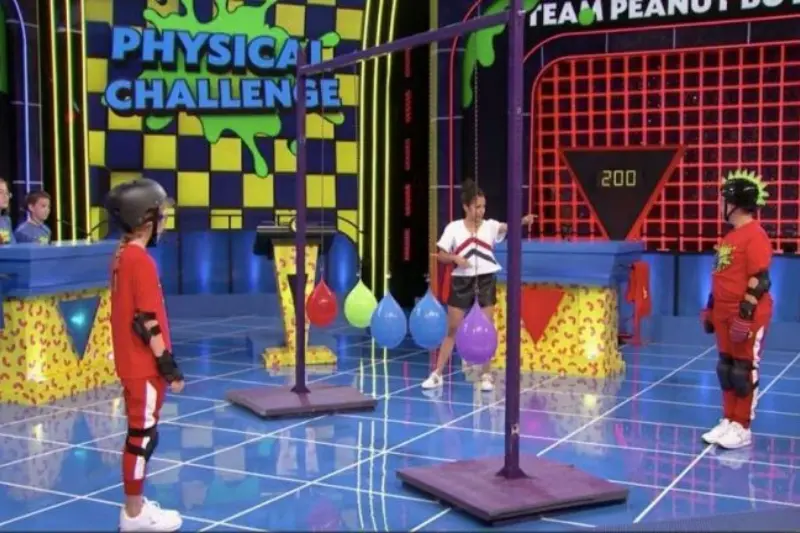
- 90s game shows were instantly recognizable for their bright, vibrant sets. From slime-filled arenas to elaborate obstacle courses, the visual appeal made the shows exciting to watch and kept viewers engaged. The colorful designs were not only fun but also created a lively atmosphere that felt larger than life.
Fun Challenges for All Ages
- Unlike many modern shows, 90s game shows offered challenges that could be enjoyed by kids, teens, and adults alike. Whether it was trivia, physical tasks, or obstacle courses, the games were designed to entertain everyone and encourage participation.
Interactive and Engaging Formats
- Many 90s shows were highly interactive, making viewers feel like they were part of the action. Whether cheering for contestants, guessing answers at home, or imagining themselves on the set, audiences were fully engaged. Shows like Nick Arcade even brought technology into the mix, adding a futuristic feel.
Memorable Hosts and Iconic Moments
- The charisma and personality of 90s game show hosts left a lasting impact. Hosts like Marc Summers (Double Dare), J.D. Roth (Fun House), and Richard Dawson (Family Feud) became household names. Their humor, encouragement, and signature style created unforgettable moments that are still remembered today.
Lessons from 90s Game Shows
While 90s game shows were primarily meant to entertain, they also taught viewers valuable lessons that went beyond trivia or winning prizes. Here’s what we can learn from these classic shows:
Creativity in Show Formats
- 90s game shows were highly innovative and imaginative. They blended trivia, physical challenges, puzzles, and even technology to create engaging experiences. This teaches us the importance of thinking outside the box and using creativity to capture attention and make experiences memorable.
The Power of Nostalgia in Entertainment
- These shows remind us how nostalgia creates a strong connection with audiences. By revisiting 90s game shows, we can see that entertainment that sparks memories can leave a lasting impact, building loyalty and emotional attachment.
Family-Friendly Fun
- Many game shows were designed for viewers of all ages, encouraging family bonding and shared experiences. This highlights the value of creating content or activities that are inclusive, interactive, and enjoyable for everyone.
Encouraging Teamwork and Problem-Solving
- Whether it was navigating obstacle courses or answering trivia together, many shows promoted teamwork, strategy, and problem-solving skills. These are lessons that go beyond the screen, teaching kids and adults alike how to collaborate and think critically under pressure.
The 90s game shows weren’t just fun—they offered entertainment with meaningful takeaways, showing us that learning and laughter can go hand in hand.
FAQs
Q1: What were the most popular 90s game shows?
Q2: Were 90s game shows only for kids?
Q3: What made 90s game shows so memorable?
Q4: Are any 90s game shows still airing today?
Q5: Why do 90s game shows remain popular in nostalgia culture?
Conclusion
The 1990s gave us a treasure trove of game shows that entertained, challenged, and inspired viewers of all ages. From the messy fun of Double Dare to the high-stakes tension of Who Wants to Be a Millionaire?, these shows combined creativity, excitement, and family-friendly entertainment in ways that remain unforgettable.
What made 90s game shows truly special wasn’t just the prizes or challenges—it was the memorable hosts, colorful sets, and moments of pure joy that brought families and friends together. Even decades later, these shows continue to evoke nostalgia, reminding us of a time when television was full of laughter, suspense, and shared experiences.
For anyone who grew up in the 90s, these game shows are more than just TV—they are a cultural memory, a reminder of childhood fun, and a testament to the timeless appeal of well-designed entertainment.
